
Ingredients & science
Mushroom coffee: what's really in it, and what it's worth
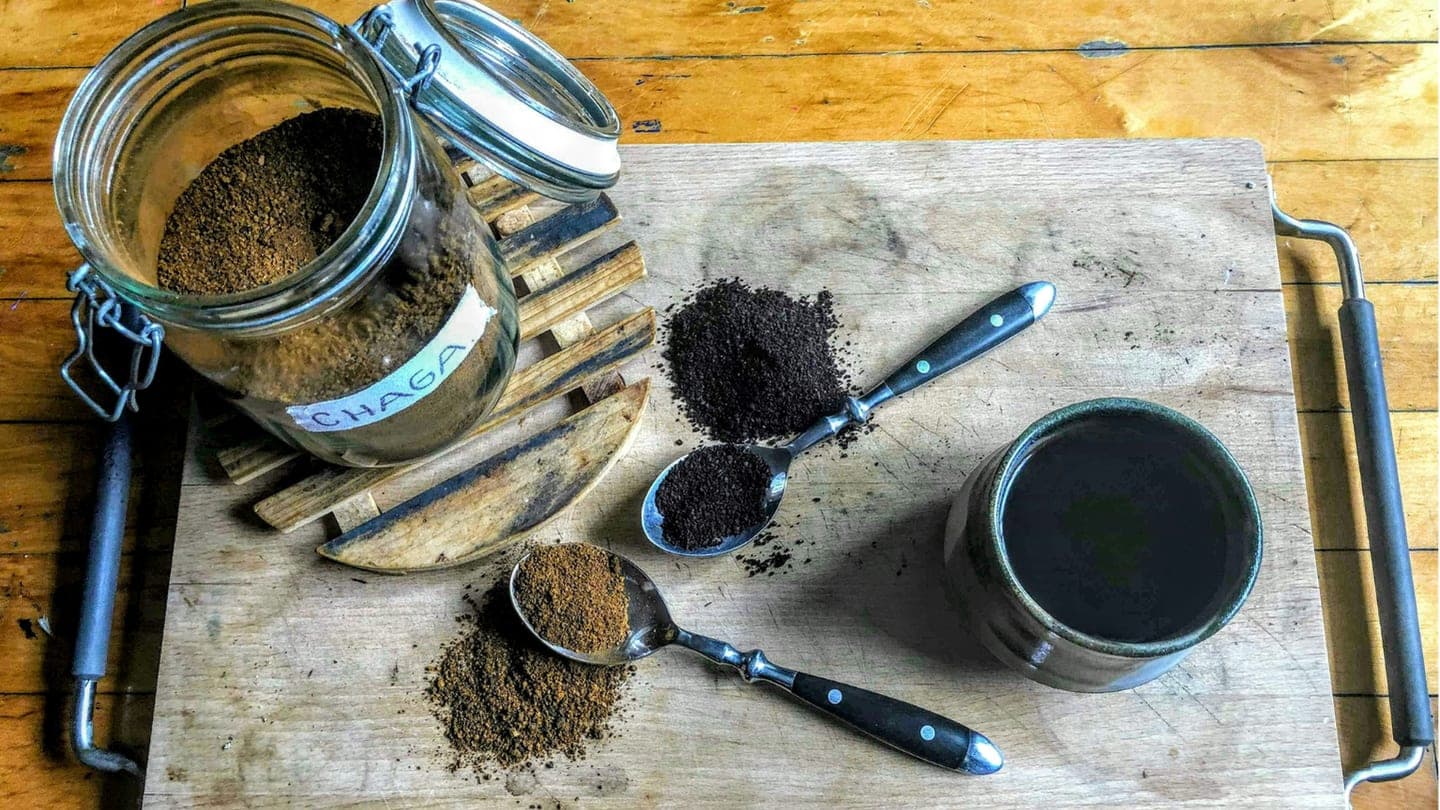
Mushroom coffee blends coffee with extracts of functional mushrooms, most often lion's mane, cordyceps, reishi or chaga. The promise: coffee's alertness with less jitteriness. What you need to know before buying fits in one sentence: everything depends on dosage, and many products contain too little to expect anything. Here is how to read a label and tell substance from marketing.
What's really in the cup
Mushroom coffee combines instant or ground coffee with powdered fungal extracts. The proportion varies enormously between brands: from a few dozen milligrams of mushroom per serving — token — to one or two grams, which start to match studied amounts.
Caffeine content is usually lower than in ordinary coffee, often by half: mushroom powder takes the place of part of the coffee. That is the first factor, often the only one, behind the reduced jitteriness people report.
The « less jitter » promise: what's true
It holds, but not for the stated reason. If your cup has 40 mg of caffeine instead of 100, you are obviously less wired — it isn't the mushroom softening caffeine, there is simply less of it.
No solid data show that a functional mushroom blunts caffeine's effects. The molecule that does is green tea's L-theanine, whose pairing with caffeine is documented — see our comparison of coffee alternatives. Some mushroom coffees do add it, which is coherent.
The mushrooms used, and what to expect
- Lion's mane: the commonest, and the only one with clinical trials on cognitive ground, with small samples and modest effects. Our dedicated lion's mane article covers that data.
- Cordyceps: studied for exercise tolerance, not alertness. Its place in a morning coffee owes more to thematic coherence than to pharmacology.
- Chaga: high antioxidant profile measured in the lab, very thin human data. Note its oxalate content, which rules it out with a history of kidney stones.
- Reishi: oriented to calm and sleep — its presence in a morning coffee is frankly counter-intuitive, unless balance is the aim.
Each is detailed in our reishi, cordyceps, chaga guide.
The decisive point: dosage
This is where a useful product parts company with a brand image. Studies use, depending on species, 500 mg to 3 g of extract a day. Yet many mushroom coffees announce a « proprietary blend » without detailing amounts — a formulation that conveniently avoids saying how much of each.
The rule is simple: if the label doesn't give the weight of each mushroom per serving, assume it is low. A brand that doses properly says so, because it is their argument.
Fruiting body or grain-grown mycelium: the deciding question
Part of the market, North American products especially, uses mycelium grown on grain — rice or oats — milled with its substrate. The resulting powder is mostly starch, with a fraction of the mushroom's compounds.
Look for fruiting body and a beta-glucan content of at least 25%. Be wary of « total polysaccharides », which includes substrate starch and inflates the figure. Finally, dual extraction in water and alcohol is needed for reishi and chaga, whose triterpenes aren't water-soluble.
Taste, and how to prepare it
A good product tastes of coffee, with discreet earthy notes. Quality extracts are barely perceptible; conversely, pronounced bitterness often signals a high proportion of reishi, which is naturally very bitter.
Preparation: like instant coffee, with water around 80°C rather than boiling, which preserves heat-sensitive compounds. Milk, dairy or plant, softens the earthy notes — hence the popularity of the latte format.
Should you drink it every day?
Nothing stands in the way if dosages are reasonable, but let's be clear: at 500 mg of mushroom a cup, you get a fraction of studied amounts. If your goal is a measurable effect on focus, a properly dosed supplement will do more; if you mainly want to cut caffeine while keeping the ritual, mushroom coffee fills that role very well.
It is a pleasant way to bring mushrooms into daily life, not a substitute for targeted supplementation.
Precautions
Functional mushrooms are well tolerated, reported side effects being mainly digestive. They are not advised during pregnancy or breastfeeding, for lack of data, nor with mushroom allergy. Reishi may thin the blood — caution on anticoagulants. Chaga calls for kidney vigilance. Caffeine remains subject to the usual markers: up to 400 mg a day for a healthy adult per EFSA, 200 mg during pregnancy.
No health claim is authorised for these mushrooms in the EU register — claims on plants and fungi are « on hold » pending evaluation under Regulation (EC) No 1924/2006. A food supplement does not replace a varied, balanced diet or a healthy lifestyle.
When to see a healthcare professional
If you want to cut down on coffee because you can't get through the day without four cups, the drink isn't the issue. Settling fatigue, palpitations, growing anxiety or sleep that has been poor for over a month justify medical advice and, often, simple blood work — see our article on fatigue that lasts.
At BIEN
Our MUSHGLOW powder takes its cue from this format but contains no coffee: it is a drink of functional mushrooms and collagen, neutral in flavour, prepared like a latte — so it works in the evening, which mushroom coffee doesn't allow. Dosages appear on the Ingredients page, and the BIEN quiz helps choose between our formulas.
Frequently asked questions
Does mushroom coffee contain caffeine?
Yes, but generally less than ordinary coffee, often by half: mushroom powder replaces part of the coffee. That explains the reduced jitteriness far more than the mushrooms themselves.
Do mushrooms blunt caffeine's effects?
No solid data show that. The molecule documented for it is green tea's L-theanine. Some products add it, which is coherent; attributing it to the mushroom is not.
What does it taste like?
Very close to coffee, with discreet earthy notes. Marked bitterness often signals a high proportion of reishi, naturally very bitter.
How do you recognise a good product?
The weight of each mushroom stated per serving — not a « proprietary blend » —, fruiting body rather than grain-grown mycelium, beta-glucans at 25% or more, and dual extraction for reishi and chaga.
Is it actually effective?
Entirely dose-dependent. At 500 mg of mushroom a cup you are far from the 1 to 3 g used in studies. It is a good way to cut caffeine while keeping the ritual, not a substitute for a dosed supplement.
Is MUSHGLOW a mushroom coffee?
It takes its cue from one but contains no coffee: a drink of functional mushrooms and collagen, neutral in flavour, which can therefore be drunk in the evening.
Going further
Our 6-in-1 powder, to add to your morning preparations.