
Ingredients & science
What is an adaptogen? Definition, plants and benefits
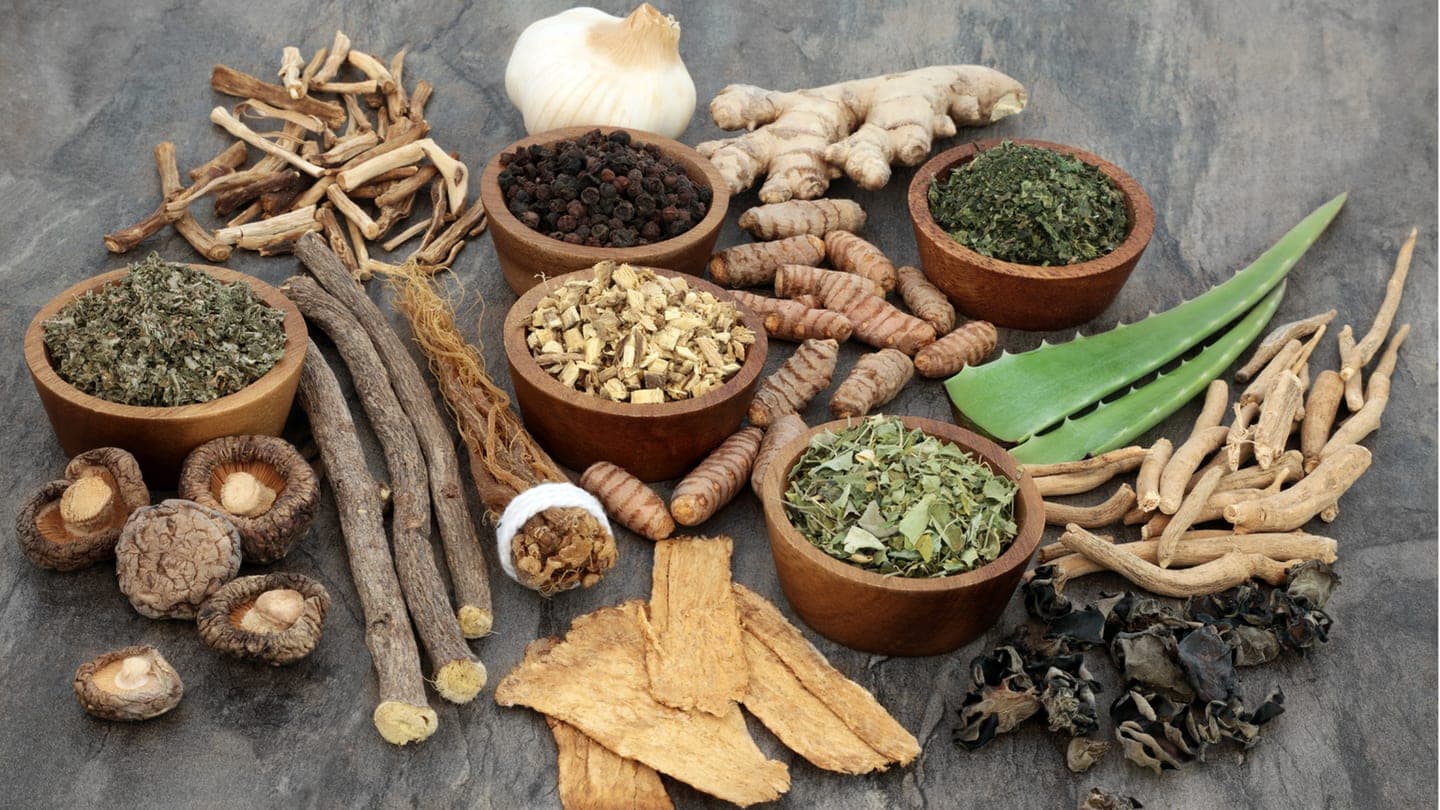
An adaptogen is a natural substance — plant or mushroom — that helps the body cope with physical, mental or environmental demands, by favouring a return to balance rather than by stimulating. That nuance is what separates it from a stimulant, and it's what we'll unpack here: where the term comes from, which criteria a plant must meet, which ones qualify, and what regulation allows you to say about them.
The definition, and where it comes from
The word was coined in 1947 by the Russian pharmacologist Nikolai Lazarev, then refined in 1968 by Israel Brekhman. Three criteria had to be met: being non-toxic at usual doses, increasing the body's non-specific resistance — that is, to demands of varied nature — and having a normalising action that returns towards balance rather than pushing in one direction.
That third criterion is the interesting one. A stimulant always pushes the same way, whatever your state. An adaptogen is described as a modulator: the same active is associated with calming in a tense person and with supporting vitality in an exhausted one.
One point must be clear: « adaptogen » is a pharmacology term, not an EU regulatory category. No legal definition frames it in the Union, which is why you find it on wildly uneven products.
How they work, as far as we know
The best-documented mechanism concerns the hypothalamic-pituitary-adrenal axis, which drives the stress response and cortisol secretion. Several adaptogens are studied for their influence on it: the work indexed on PubMed focuses mainly on ashwagandha, rhodiola and eleuthero.
Depending on the species, antioxidant compounds are added and, for mushrooms, beta-glucans — cell-wall polysaccharides under research for immunity. The quality of evidence varies a great deal between actives: solid for some, preliminary for others. An honest article has to say so.
One last point: their action is gradual. Nothing happens in three days. Study protocols generally run eight to twelve weeks, which is why a course of at least a month is recommended.
The most studied plants and mushrooms
Ashwagandha (Withania somnifera)
The best documented on stress and cortisol. A root used in Ayurvedic medicine, now standardised in withanolides. Forms and contraindications in our page on ashwagandha.
Rhodiola rosea
Studied for mental fatigue and demanding periods. Take it in the morning, as it can interfere with falling asleep.
Panax ginseng
The longest-documented tonic, used for general vitality. Avoid combining it with certain treatments without medical advice.
Functional mushrooms
Reishi, cordyceps, chaga and lion's mane form the family of so-called adaptogenic or functional mushrooms. They're compared in detail in our guide to adaptogenic mushrooms and, for the main three, in Reishi, Cordyceps and Chaga.
Saffron, eleuthero, schisandra
Less known to the public, they complete the family. Saffron is studied for mood and has the advantage of being active at low doses.
What regulation allows you to say
This is the part most articles skip. In the European Union, health claims are governed by regulation (EC) No 1924/2006: only those listed in the EU register may be used.
Claims relating to plants — « botanicals » — are still pending evaluation by EFSA. They are tolerated in their filed wording, which forbids rephrasing them freely and explains the careful language of serious brands: you read « contributes to » or « supports », never « cures » or « treats ».
A food supplement is not a medicine. By legal definition it cannot claim any property of preventing, treating or curing a disease. A brand that says otherwise is in breach, and France's DGCCRF enforces this field.
How to use them, concretely
- In courses of one to three months, followed by a break: that's the usual pattern.
- At the right time: rhodiola and ginseng in the morning, reishi and ashwagandha rather in the evening.
- On a standardised extract where one exists: it guarantees a constant active content, unlike raw plant powder.
- With regularity rather than at high doses: studies are built on daily intake, not on peaks.
Format matters less than adherence: the best form is the one you'll actually take every day for a month. That's the subject of our comparison, gummies or capsules.
Precautions and contraindications
Non-toxic doesn't mean harmless. Adaptogens are not advised during pregnancy or breastfeeding, and require medical advice alongside ongoing treatment — particularly thyroid, anticoagulant, antidiabetic, anxiolytic or immunosuppressant. Ashwagandha is also not advised in autoimmune conditions.
Respect the stated daily dose, don't stack several products containing the same active, and mention what you take to your doctor or pharmacist, exactly as you would a medicine.
Where to start
Start from the need, not the ingredient. Sleep and nervous tension point to ashwagandha, reishi and saffron; focus to lion's mane and rhodiola; physical energy to cordyceps and ginseng. The BIEN quiz sorts this in a minute, and the ingredients page details every active used in our formulas.
Frequently asked questions
What is an adaptogen, simply put?
A plant or mushroom that helps the body resist demands — stress, fatigue, effort — by favouring a return to balance, without the direct stimulant effect of caffeine.
Which adaptogens are best known?
Ashwagandha, rhodiola, panax ginseng, eleuthero and saffron among plants; reishi, cordyceps, chaga and lion's mane among mushrooms.
How long before you feel the effects?
Allow three to four weeks of regular use. Clinical studies usually run eight to twelve weeks: nothing is decided in a few days.
Are adaptogens scientifically recognised?
The term comes from pharmacology and several actives are the subject of clinical trials, with evidence quality varying by species. However, « adaptogen » is not an EU regulatory category, and claims on plants remain pending EFSA evaluation.
Can you take several adaptogens together?
Yes — that's the logic of combined formulas, which pair complementary actives. Avoid stacking several products containing the same active, so as not to exceed doses.
Are there contraindications?
Pregnancy, breastfeeding, thyroid, anticoagulant, antidiabetic, anxiolytic or immunosuppressant treatments, and autoimmune conditions for ashwagandha. Seek advice from a healthcare professional.
Going further
Our natural chewable supplements: science-based dosages, no added sugar, no artificial additives and vegan.